
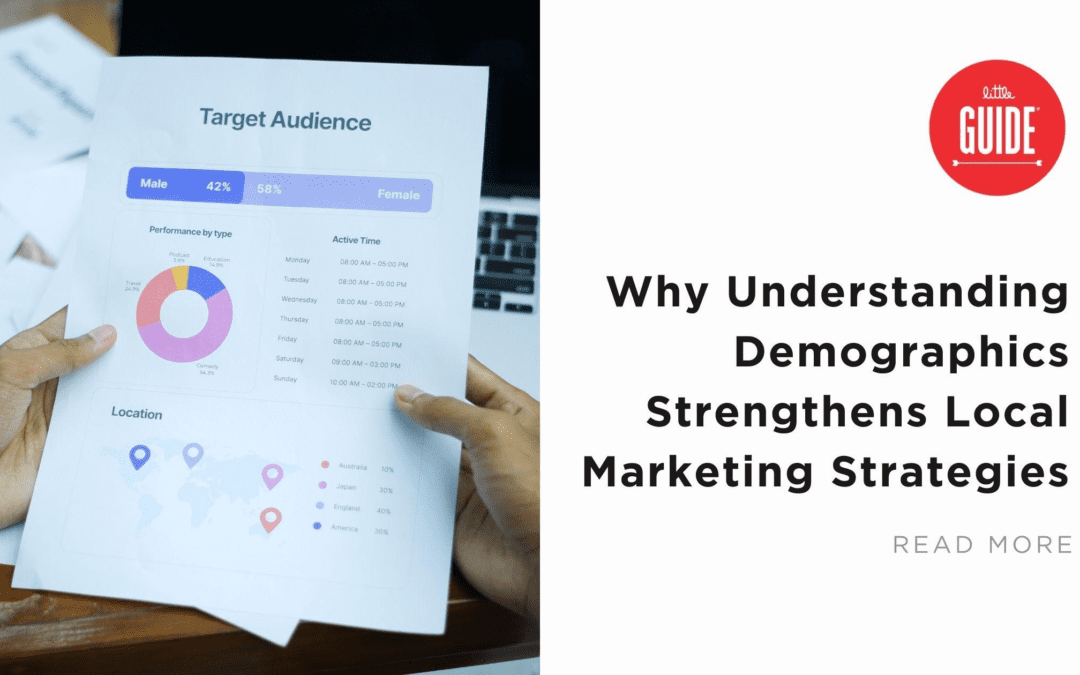
- Demographic insights enable businesses to align messaging, services, and media choices with the real needs and characteristics of their local community.
- Strategic use of demographic trends supports proactive planning, stronger trust, and higher retention through culturally aware and stage-relevant outreach.
- Little Guide empowers businesses to connect with families and neighborhoods through thoughtful, insight-driven local marketing strategies that foster lasting growth.
Local marketing has always required attentiveness. Business owners who pay close attention to the people around them tend to build stronger connections, earn deeper trust, and create offerings that feel thoughtfully designed rather than randomly assembled. At the heart of that attentiveness lies a powerful tool: demographics.
Demographics help businesses understand who lives, works, studies, and shops in a specific area. Yet understanding demographics is not about collecting surface details or filling spreadsheets with statistics. It is about interpreting patterns in age, income, education, culture, family structure, and lifestyle to uncover what truly matters to a community.
When local marketing strategies are grounded in demographic insight, decisions feel deliberate. Campaigns resonate. Messaging sounds familiar rather than forced. Investments deliver better returns because they are guided by insight rather than assumption.
This article explores how demographic understanding strengthens local marketing strategies in practical and meaningful ways, and how businesses can apply these insights thoughtfully to build long-term growth.
Demographics Reveal Who Your Community Really Is
Many businesses operate on assumptions about their audience. A store owner may believe their customers are primarily young professionals. A clinic might assume most patients are retirees. A restaurant may assume families dominate weekend bookings. Assumptions can be directionally helpful, but they rarely capture the full picture.
Demographic analysis clarifies reality.
Age distribution influences product offerings, communication style, and pricing. A neighborhood with a high concentration of young families will respond differently to promotions than one with a significant senior population. Educational background can shape how detailed your messaging should be. Household income levels affect purchasing decisions and perceived value.
Understanding these characteristics allows businesses to move from generic targeting to informed segmentation. Rather than broadcasting a single message to everyone, local marketers can craft distinct approaches tailored to key demographic groups within the same area.
For example, a fitness studio located near both a university campus and a residential suburb may identify two major segments: students seeking affordable, flexible memberships and working parents seeking structured, results-driven programs. Without demographic clarity, the studio might blend its messaging and dilute its appeal. With it, the studio can design offers that speak directly to each group.
Demographics anchor strategy in evidence rather than instinct.
Demographic Insight Shapes Relevant Messaging
Relevance determines whether marketing feels helpful or intrusive. When a message aligns with a person’s stage of life, responsibilities, and aspirations, it feels like an invitation rather than a sales pitch.
Demographic data helps businesses understand language preferences, cultural values, lifestyle rhythms, and decision-making drivers. These insights inform tone, imagery, and storytelling.
Consider cultural composition within a local area. If a significant portion of residents speaks a particular language at home, incorporating that language into signage or promotional materials communicates respect and inclusion. If a community places strong emphasis on education and extracurricular development, messaging that highlights learning outcomes or skill building can carry greater weight.
Family structure is another influential factor. In areas with a high number of dual-income households, convenience may rank high among priorities. Marketing that emphasizes time savings, efficiency, and streamlined service can resonate strongly. In contrast, neighborhoods with a larger retiree population may respond better to messaging centered on trust, stability, and personalized care.
The key lies in interpreting demographic trends as human stories. Data alone does not inspire connection. Thoughtful translation of that data into empathetic messaging does.
Better Product and Service Alignment
Local marketing extends beyond advertising. It influences how products and services are designed, packaged, and delivered.
When demographic analysis reveals a growing number of young children in a community, businesses can adapt offerings to serve families. A cafe might introduce child-friendly menu options and play corners. A healthcare provider may expand pediatric services. A retail store might stock school essentials during key enrollment periods.
Similarly, understanding income distribution can guide pricing strategy. Businesses operating in areas with diverse income levels may benefit from tiered offerings that accommodate different budgets while maintaining quality.
Education levels can influence how much detail customers expect before making a purchase. In communities with high professional density, transparent information, detailed comparisons, and evidence-based claims may carry significant persuasive power.
Demographics also highlight gaps in the market. If analysis shows a large population of working professionals but limited early morning services in the area, there may be an opportunity to open earlier hours. If a growing immigrant community lacks culturally familiar products or services, a business that thoughtfully addresses that need can earn loyalty quickly.
Effective local marketing aligns what you offer with who your community is becoming, rather than who it used to be.
Strengthening Location-Based Decisions
For brick-and-mortar businesses, location decisions shape long-term viability. Demographic data plays a central role in choosing where to open, expand, or relocate.
Population density affects foot traffic potential. Age clusters influence service suitability. Income distribution impacts average transaction value. Household composition informs space design and layout.
A children’s enrichment center may thrive in a neighborhood dense with families and schools, yet struggle in an area dominated by single-occupant households. A luxury boutique may perform better near higher-income residential zones or business districts.
Even within a single city, micro demographics can vary significantly from one neighborhood to another. Relying on broad city-level statistics may obscure important local variations. Businesses that drill into neighborhood-level insights can make sharper decisions.
Demographics also inform hyperlocal marketing tactics. Community events, sponsorships, and partnerships should reflect who lives nearby. If a district hosts frequent cultural festivals aligned with a particular heritage group, participating authentically can strengthen brand visibility. If local schools organize sports tournaments, supporting those initiatives may connect the business with families.
Strategic location-based marketing grounded in demographics ensures that outreach efforts align with real community rhythms.
Improving Media and Channel Selection
Understanding who your audience is influences where and how you communicate.
Different demographic groups consume information differently. Younger residents may rely heavily on social platforms and mobile search. Older demographics might respond more to local newspapers, radio, or community bulletin boards. Professionals may engage with email newsletters during work hours, while families might respond to weekend promotions.
Channel selection becomes clearer when demographic patterns are understood.
For example, if analysis reveals a strong presence of university students, campus partnerships, digital promotions, and referral programs can be effective. If the area includes many small business owners, local networking events and professional associations may offer valuable exposure.
Demographics also guide content format. Visual storytelling may resonate with younger audiences. Detailed informational guides may appeal to highly educated segments. Bilingual materials may serve culturally diverse communities.
When channel selection aligns with demographic habits, marketing budgets stretch further. Resources are directed toward platforms where attention is already present rather than scattered across channels with limited local impact.

Building Trust Through Cultural Awareness
Trust is central to local success. People tend to support businesses that reflect and respect their community’s identity.
Demographic understanding fosters cultural awareness. It helps businesses appreciate traditions, values, and sensitivities that shape purchasing decisions.
For instance, religious observances may influence peak shopping times or preferred service days. Cultural holidays may present opportunities for thoughtful promotions or community involvement. Dietary practices can inform menu development. Dress norms may influence product presentation.
Engaging with these nuances requires care and sincerity. Surface-level gestures can appear performative. Genuine engagement involves listening, participating, and aligning business practices with community expectations.
Demographic awareness also supports inclusive marketing. Representation in imagery, testimonials, and messaging should reflect the real makeup of the local audience. When people see themselves represented accurately, it strengthens emotional connection.
Businesses that demonstrate cultural sensitivity signal that they value relationships, not only transactions.
Anticipating Change Rather Than Reacting to It
Communities change. New housing developments attract young families. Universities expand and increase student populations. Corporate relocations bring professionals from different regions. Economic shifts alter income distribution.
Demographic trends provide early signals of these transitions.
By monitoring population growth patterns, migration trends, and age distribution shifts, businesses can anticipate future demand. Rather than scrambling to adapt after customer behavior changes, proactive marketers can prepare offerings in advance.
For example, a suburb experiencing rapid residential construction may soon require additional childcare services, grocery options, and healthcare providers. Businesses that recognize this trend early can secure strategic positions and establish brand recognition before competition intensifies.
Similarly, an area witnessing gradual aging of its population may benefit from increased health and wellness services, mobility-friendly infrastructure, and senior-focused programs.
Local marketing strategies rooted in demographic foresight position businesses as responsive and forward-thinking.
Enhancing Customer Retention and Loyalty
Understanding demographics strengthens not only acquisition but also retention.
When businesses comprehend the life stages and priorities of their customers, they can design loyalty initiatives that align with evolving needs. A family that begins as a couple may later require child-focused services. A student may transition into a working professional. A renter may become a homeowner.
Tracking demographic shifts within your existing customer base allows for tailored communication at each stage.
Personalization grounded in demographic awareness feels considerate. It shows that the business understands its customers as individuals shaped by specific contexts.
Retention strategies can include milestone-based outreach, educational resources relevant to life stage transitions, and curated recommendations aligned with household characteristics.
Local businesses hold a unique advantage here. Their proximity allows for consistent interaction and feedback. When demographic insight informs these interactions, loyalty deepens organically.
Practical Steps to Apply Demographic Insight
Understanding the importance of demographics is one thing. Integrating it effectively into a local marketing strategy requires intention. The following practical actions can guide implementation:
- Combine publicly available census data with customer surveys to build a layered understanding of your area.
- Segment your audience based on meaningful demographic variables rather than treating the community as a single group.
Beyond data collection, interpretation is crucial. Encourage your team to discuss what the numbers imply about daily routines, aspirations, and challenges within the community. Translate statistics into personas grounded in real human experiences.
Revisit demographic analysis periodically. Communities shift over time. A strategy that fit five years ago may require refinement.
Finally, integrate demographic insight across departments. Marketing, operations, customer service, and product development should share a common understanding of who the community is. Alignment ensures consistency in brand experience.
Avoiding Common Pitfalls
While demographics are powerful, they must be used responsibly.
One common mistake is stereotyping. Demographic trends describe patterns, not rigid identities. Not every individual within a segment behaves identically. Marketing should remain flexible and respectful.
Another pitfall is relying solely on quantitative data. Numbers provide direction, but qualitative insight gathered through conversations, reviews, and community engagement adds depth.
Businesses should also avoid analysis paralysis. Overanalyzing minor variations can delay action. Focus on the demographic variables most relevant to your offering and location.
When applied thoughtfully, demographic insight enhances clarity without limiting creativity.
The Long-Term Advantage of Demographic Understanding
Local marketing grounded in demographic understanding delivers compound benefits. Campaigns resonate because they reflect real community dynamics. Product offerings align with current and emerging needs. Media investments become more efficient. Trust strengthens as businesses demonstrate cultural awareness and responsiveness.
Over time, this alignment builds reputation. Customers perceive the business as embedded within the community rather than operating on its edges.
The strongest local brands often share a common trait. They understand their neighbors deeply. They adapt as the community grows and changes. They listen closely to demographic signals and respond with care.
Understanding demographics strengthens local marketing strategies because it transforms abstract outreach into meaningful connections. It encourages businesses to view their audience as a living, diverse community shaped by age, culture, income, education, and aspiration.
When marketing decisions reflect that understanding, growth becomes sustainable. Loyalty becomes earned. And the relationship between business and community becomes mutually supportive and enduring.
At Little Guide, we help businesses connect meaningfully with local families and communities. Discover how deeper audience insight can strengthen your outreach, refine your strategy, and build lasting relationships that support sustainable growth in your area. Partner with us to grow with purpose.
| Focus Keywords | Local Marketing Strategies, Demographic Insights, Community Based Marketing |
| Internal Links to Business | https://mylittleguide.com/ |
| Blog Topic | Marketing Strategy |
| Word Count | 1500-2000 |
| URL: | /understanding-demographics-strengthens-local-marketing-strategies |
| Alt Text: | IMG 1: Target demographic statistics with the business logo, blog title, and read more option.
IMG 2: Two people presenting on the topic of potential customers to clients. |
| Meta Title: | Understanding Demographics Strengthens Marketing Strategies |
| Meta Description: | Discover how demographic insights help local businesses craft relevant messaging, align services, and build stronger community connections. |